Quick answer: leggings can create a visible front outline when seam placement, rise, pattern shape, stretch, and movement pull the fabric close to the body. Seamless-front or gusseted designs, a better-matched rise, and more substantial fabric may change the appearance.
Start with construction, not self-criticism
Leggings have to stretch in several directions while staying up. That job creates tension. A central seam may concentrate it; a rise that is too short for the wearer’s torso may pull upward; thin or shiny fabric can emphasize small changes in contour. None of this means a body is shaped incorrectly.
The term itself is explained in our respectful definition of camel toe. Here, the focus is how activewear is built and what a shopper can realistically compare.
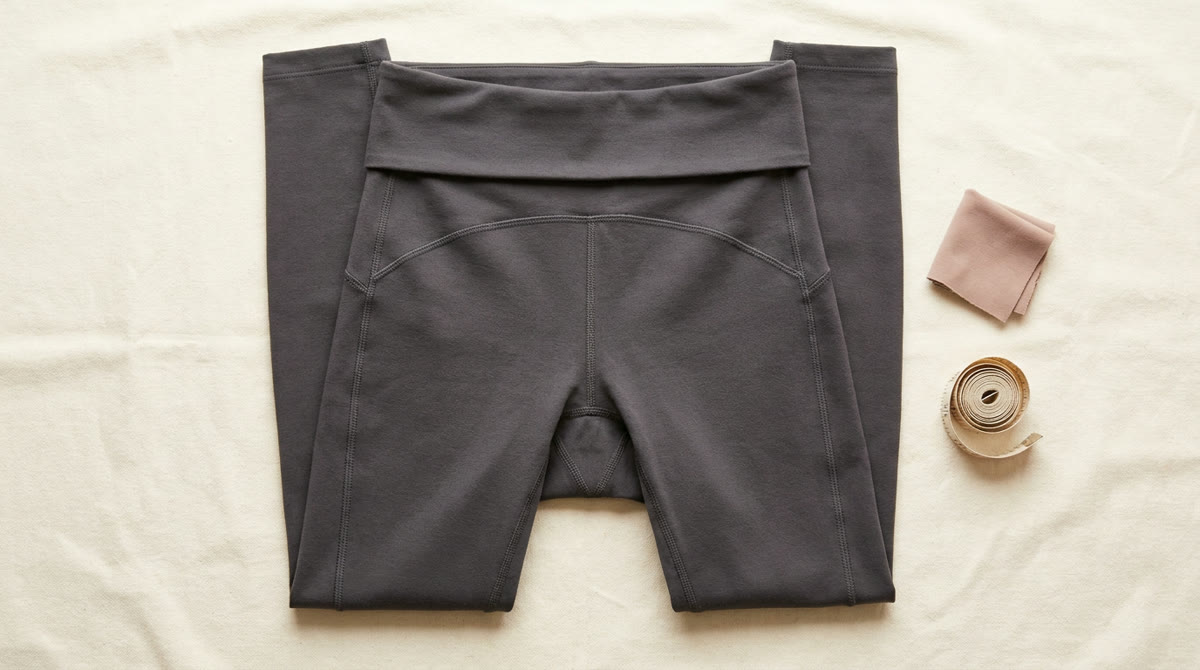
Five details to compare
- Front seam. Traditional leggings often join two front panels with a vertical seam. Seamless-front designs remove that line, which can reduce inward pull, though it does not guarantee a perfectly smooth result.
- Gusset. A diamond- or triangle-shaped crotch panel can spread tension across more seams and improve movement. Shape and placement vary by brand, so the word “gusseted” alone is not a quality guarantee.
- Rise. High-rise describes where the waistband is intended to sit; it does not tell you the actual front-rise length. Compare measurements when available, especially if leggings tend to pull upward or the waistband rolls.
- Fabric. Matte, double-knit, brushed, patterned, or slightly heavier material often shows less fine contour than thin, pale, or glossy fabric. Compression should feel supportive rather than restrictive.
- Pattern and size. More room can reduce tension, but sizing up may make the waist or knees loose. A different pattern—rather than a larger version of the same one—may fit better.
A useful fitting-room movement test
Check leggings in the movements for which you will use them. Walk, sit, squat, lift one knee, and bend comfortably. Then let the fabric settle instead of immediately pulling it into position. Consider these questions:
- Does the waistband stay where you want it without constant adjustment?
- Does the front seam pull upward after movement?
- Can you move and breathe normally without pinching or numbness?
- Does the fabric become much more revealing when stretched?
- Do you like the fit in ordinary light as well as flattering mirror light?
If the garment repeatedly migrates or feels uncomfortable, it is usually more useful to change the cut, rise, or construction than to keep adjusting it.
Comfort comes first: shapewear, inserts, or very tight underwear should never cause pain, pressure, numbness, broken skin, or persistent irritation.
Underwear and layering
A smooth underwear style can sometimes change how the outer fabric lies. Results depend on the cut and on how the two fabrics move together. Adding a liner or insert can also create new edges, heat, or pressure, so it is not automatically the best answer.
For styling, a longer top, a tied layer, textured fabric, a print, or a darker color can reduce visual emphasis. These are optional aesthetic choices. A visible outline is not indecent by itself, and nobody owes strangers a perfectly flat clothing surface.
Common myths
“It always means the leggings are too small.” Not necessarily. Size is one factor; rise and seam geometry may be the decisive ones.
“No-front-seam leggings always solve it.” They remove one possible cause, but stretch and panel shape still matter.
“You can judge the fit from a product photo.” Product lighting, retouching, pose, and the model’s measurements make that unreliable. A movement test on your own body is more useful.
When it is more than appearance
This page addresses clothing fit, not health. If any garment causes persistent pain, chafing, numbness, broken skin, or another symptom that continues after changing clothes, stop wearing it and seek advice from a qualified clinician.
Continue reading
The complete camel toe fashion guide covers swimwear, trousers, photography, body-positive language, and practical options beyond leggings.